
The Edge
Know What They Know
🐷 PIG ROAST
💬 Word on the Street
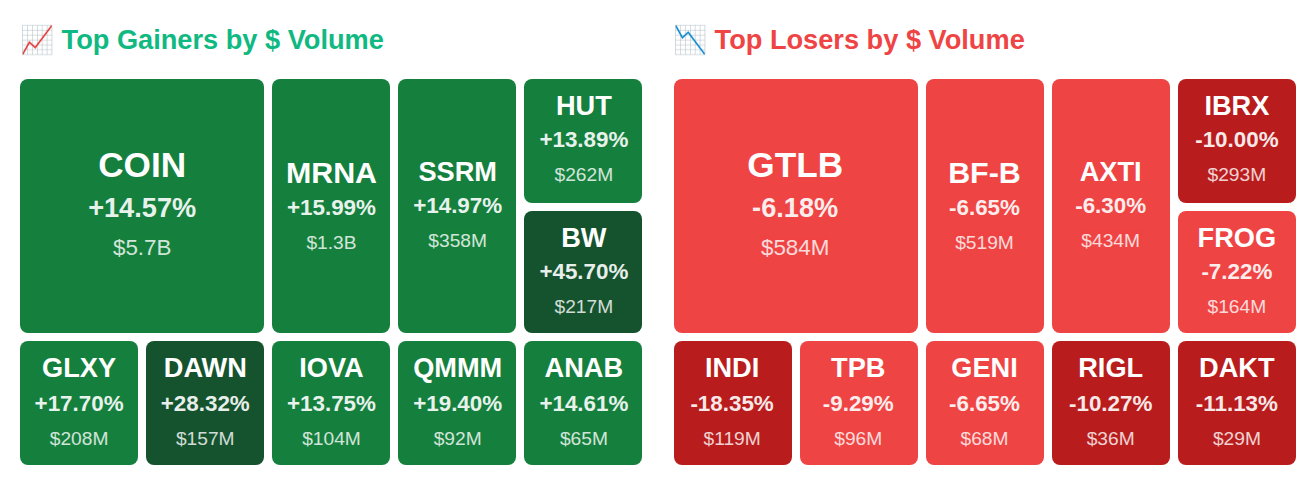
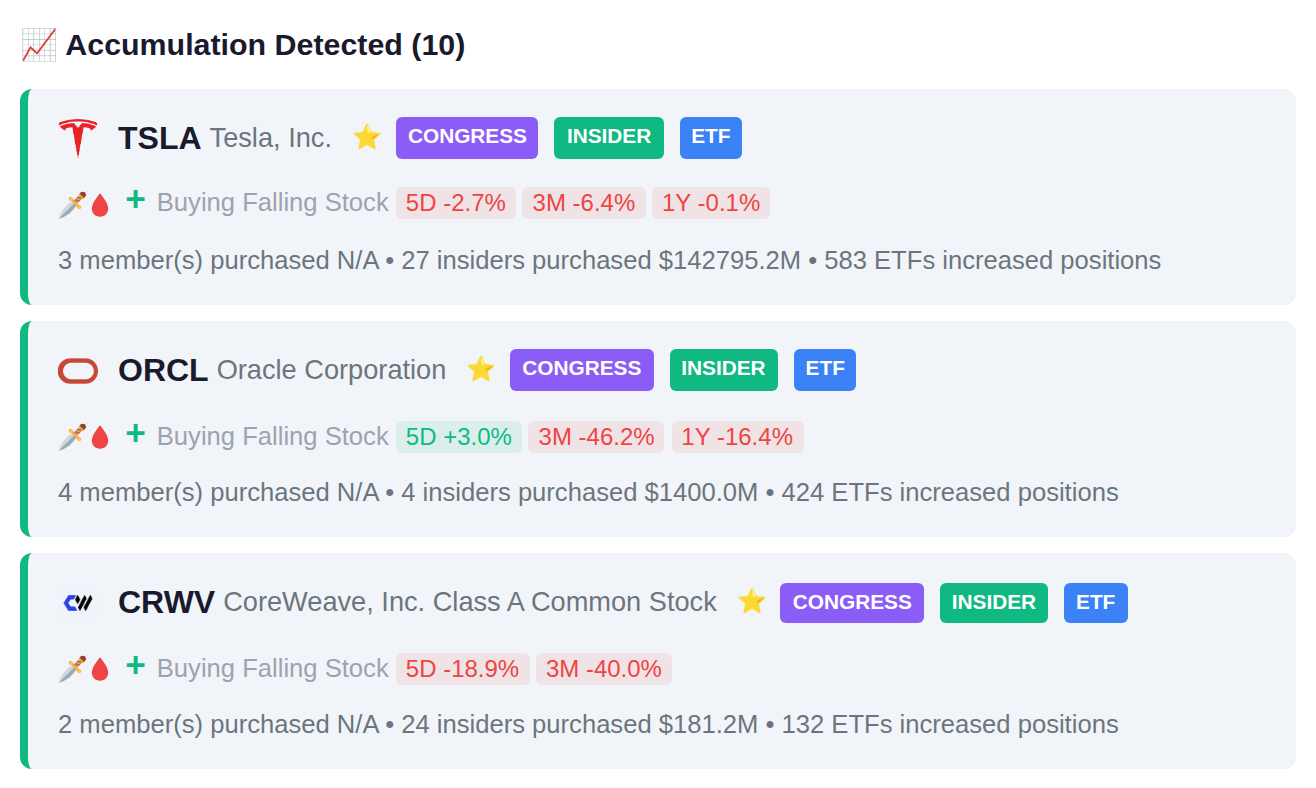
While Rep. Virginia Foxx (R-NC) quietly scooped up Alliance Resource Partners LP (ARLP) units worth up to $15,000, four insiders at NRG Energy Inc. (NRG) collectively dumped a staggering $5.3 billion in stock—and that's just the beginning of today's $9.0 billion net smart money outflow as the VIX spiked 20.6% to 23.6. After hours, President Trump's crypto cheerleading launched Coinbase Global Inc. (COIN) up 14.6% to $208.93 and MicroStrategy Incorporated (MSTR) up 10.4% to $146.44, while AppLovin Corporation (APP) surged 10.0% to $482.81 on Morgan Stanley conference optimism. Here's what smart money is doing today.
 30
30 0
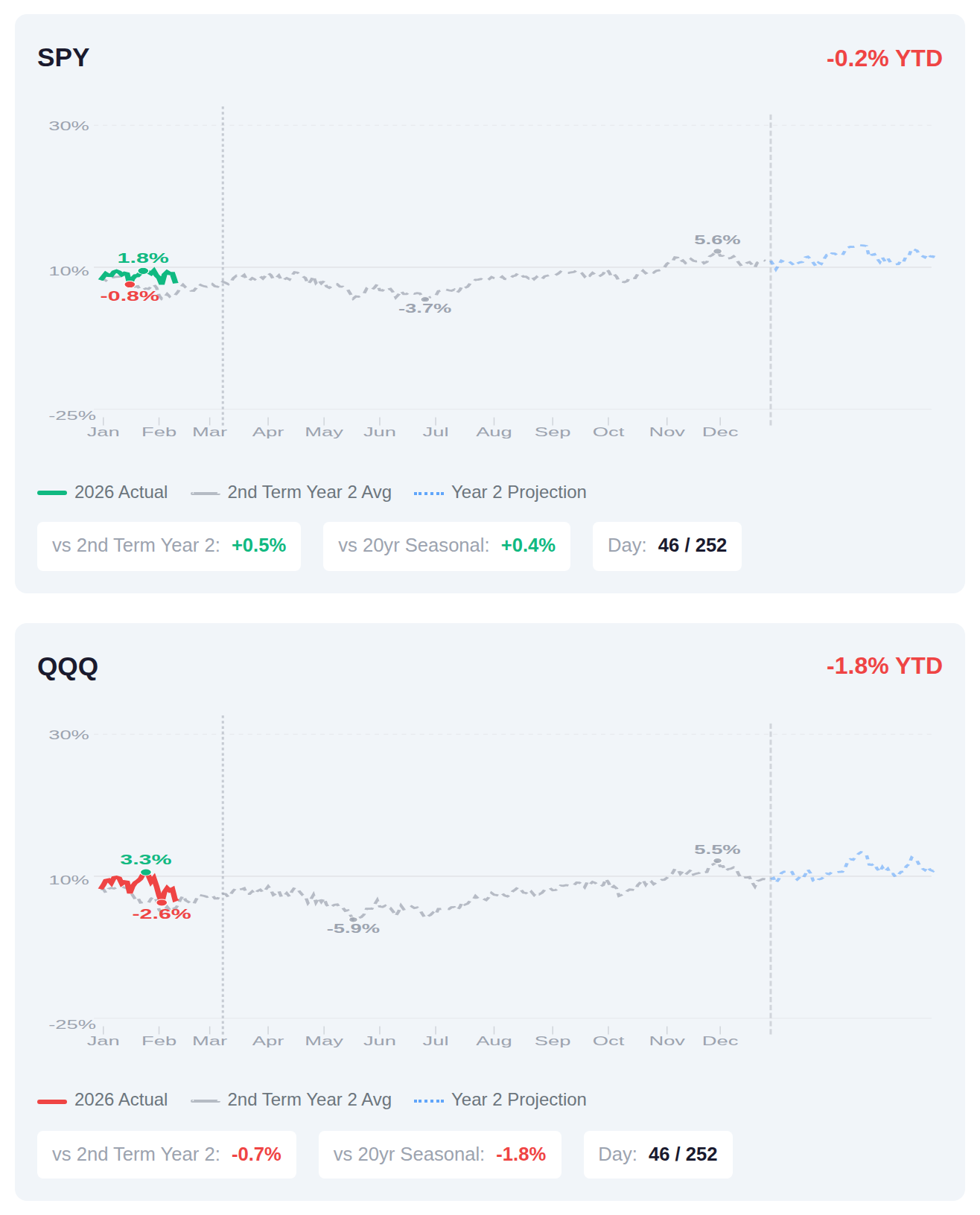
0We're 46 days into Year 2 of Trump's second term, and the market is delivering a mixed performance against historical patterns—SPY is running half a point ahead of typical second-term Year 2 behavior at -0.2% YTD, while QQQ is lagging at -1.8% and trailing its historical comparison by 0.7%. The interesting setup here is that second-term Year 2s have historically averaged 3.5% full-year returns for SPY, with another 1.5% typically added through mid-March, suggesting the heavy lifting in these cycles tends to come after this sluggish start. What institutions are seeing is a market that's essentially on-script for the presidential cycle's historically weakest year, though large-cap tech is showing more pressure than the broader market compared to past patterns.
📚 Jargon Buster
Dividend
Company mailing you a thank-you check just for owning the stock. Free money? Sort of. They just take it out of the stock price first.
Equity volatility spiked into elevated territory this week, with the VIX climbing 20.6% to 23.57, reflecting increased uncertainty in stock markets as fear gauges moved above the typical range of market calm. In contrast, bond market volatility remains subdued, with the MOVE index at just 13.80 despite a 13.6% weekly increase, indicating that fixed income investors are pricing in considerably less turbulence than their equity counterparts. This divergence between stock and bond volatility measures suggests investors are bracing for equity-specific risks while maintaining relative confidence in the stability of interest rate movements.

|| Market Sutra ||
"The hardest trade emotionally is often the right one mathematically."
— Buying during Brexit panic yielded outsized gains.
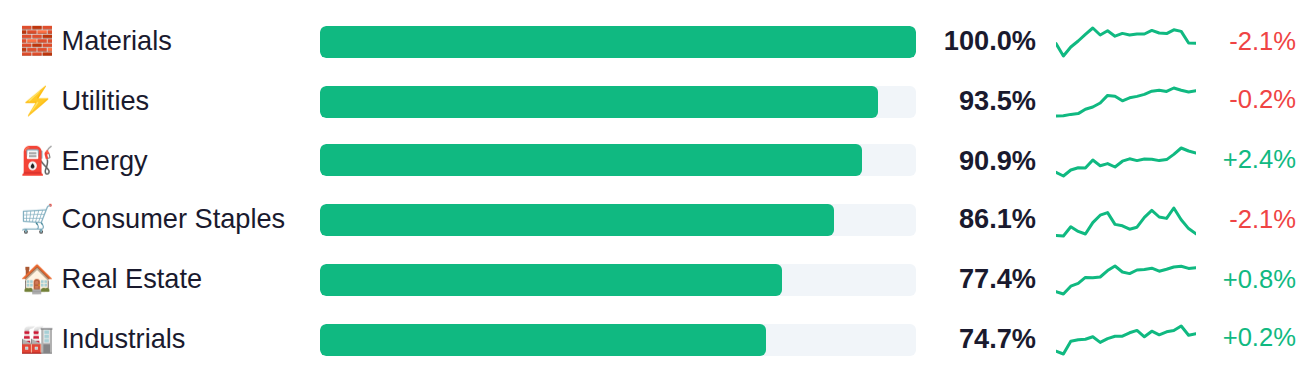
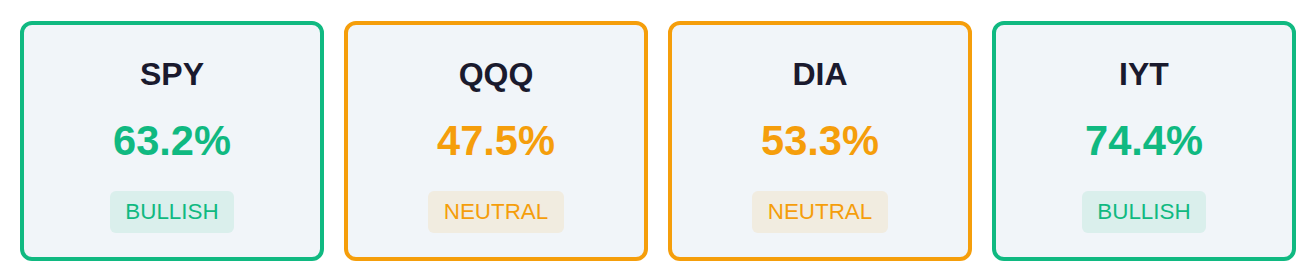
Market breadth shows a defensive rotation with Materials, Utilities, and Energy exhibiting the strongest participation above 90%, while growth-oriented sectors like Technology and Communication Services lag significantly below 50%. The divergence between the transport-heavy IYT at 74% breadth and the tech-concentrated QQQ at just 48% suggests institutional flows are favoring traditional economy sectors over high-growth names, with the SPY's 63% reading reflecting this mixed positioning across the broader market.
As of February 25, Fed net liquidity stood at $6.61 trillion, up $0.4 billion week-over-week, indicating relatively stable monetary conditions with minimal change in the financial system's cash availability. The next H.4.1 release drops Thursday, March 5, which will show whether the Fed's balance sheet operations continue this sideways trend or shift toward expansion or contraction that historically correlates with equity market liquidity conditions.
Yesterday's data painted a picture of resilient services activity, with the ISM Services PMI jumping to 56.1 versus the 53.0 estimate—the strongest reading since August 2022—while ADP employment surged to 63K against expectations of just 19K, suggesting private sector hiring accelerated sharply in February. The ISM Non-Manufacturing Prices component fell to 63.0 from 66.6, missing the 68.3 estimate and marking the first decline in three months, though inflation pressures remain elevated in the services sector which comprises roughly 80% of the U.S. economy. Markets now turn to Friday's February jobs report where nonfarm payrolls are expected to decelerate significantly to 70K from 130K, alongside today's initial jobless claims (estimated at 215K versus 212K prior) and unit labor costs for Q4, with traders particularly focused on whether the services strength translates into labor market tightness that could complicate the Fed's policy calculus.
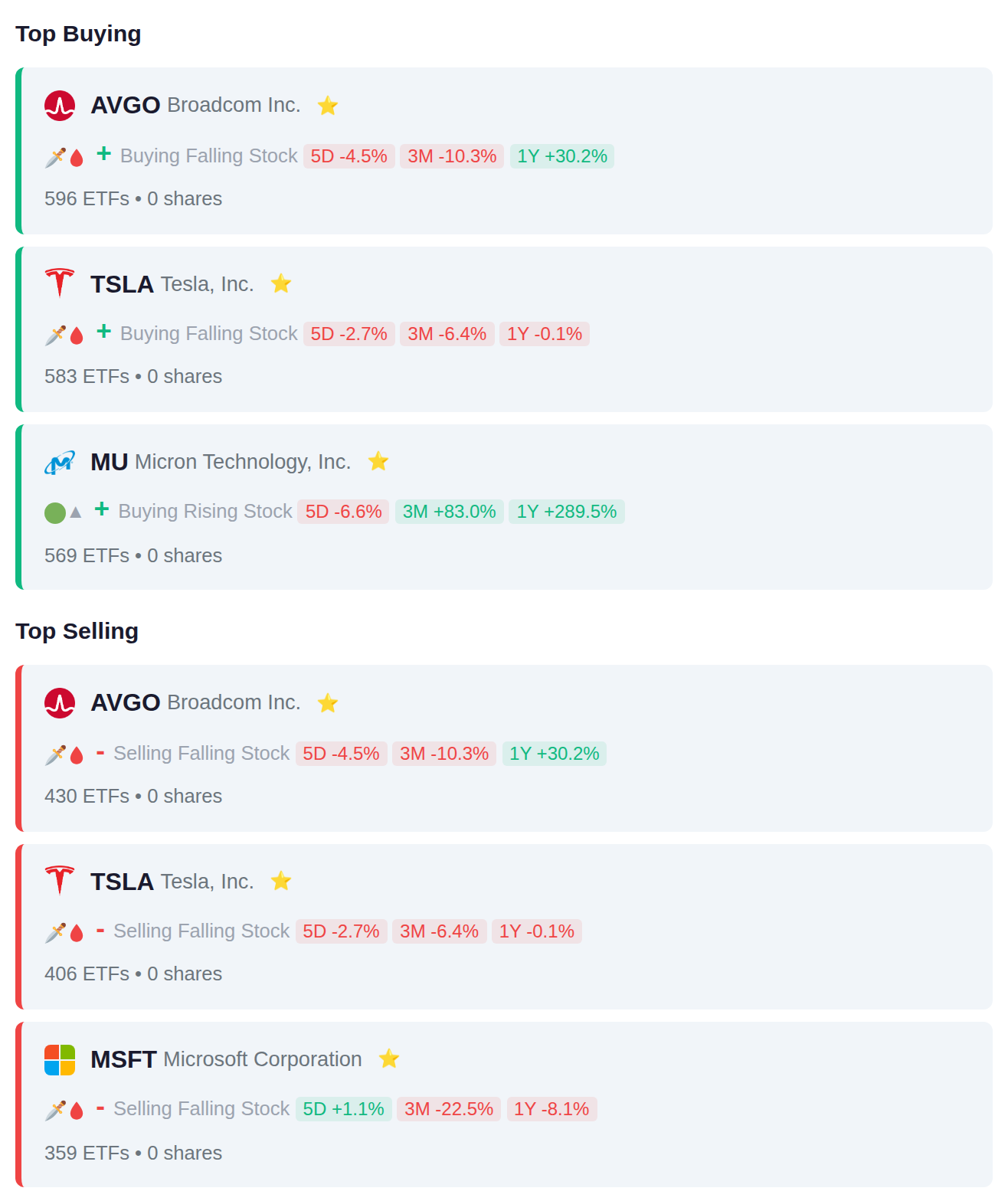
# Institutional Flow Summary ETF positioning data reveals a notable rotation into semiconductor exposure, with AVGO attracting additions from 596 funds and MU from 569 funds, even as 430 funds trimmed AVGO positions—suggesting rebalancing rather than sector abandonment. The split activity in mega-cap tech (TSLA and MSFT appearing on both lists, with balanced 10-fund net adds and removes overall) indicates institutions are redistributing capital within technology rather than exiting the sector entirely.
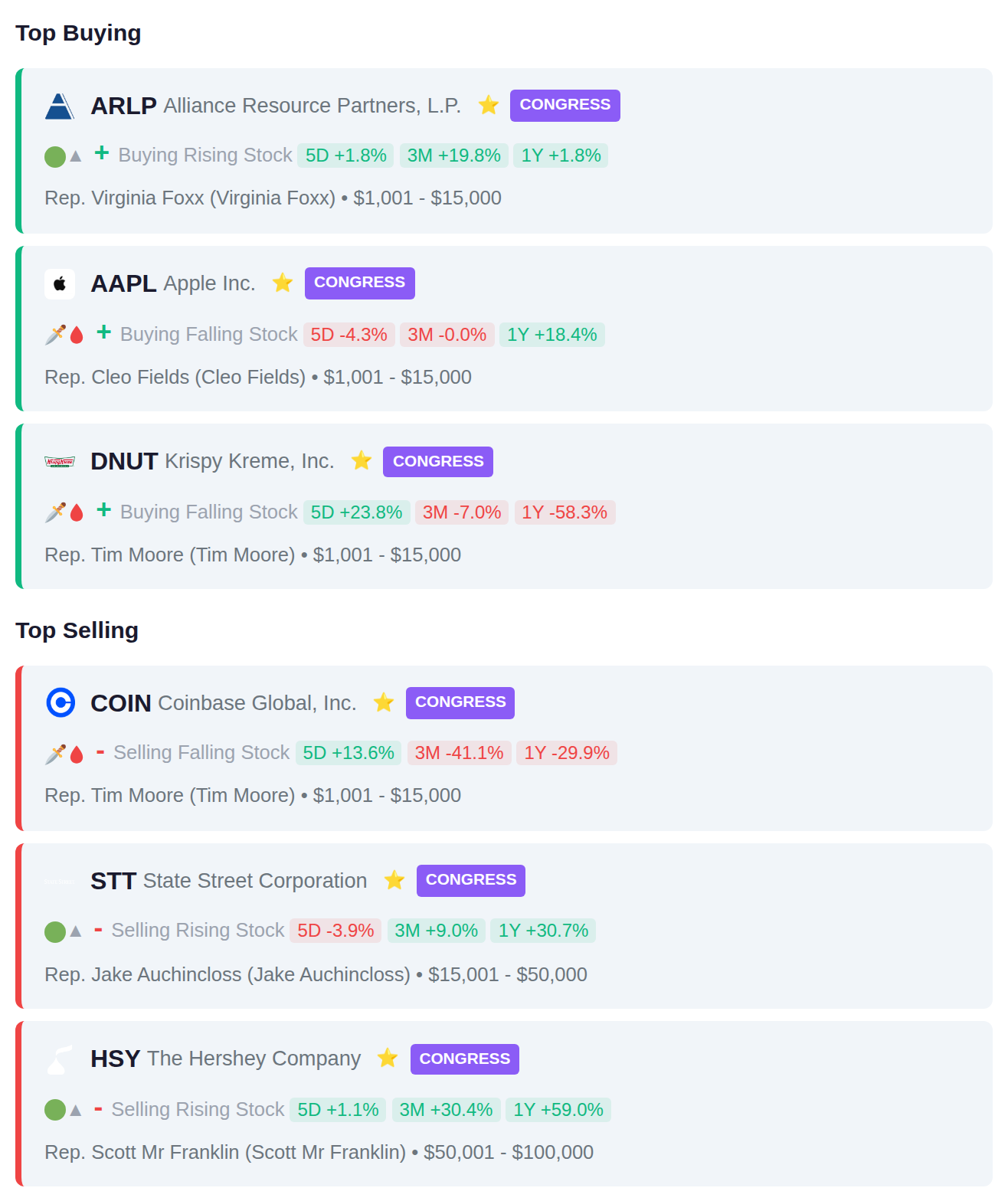
Congressional members recently disclosed several equity transactions, with Rep. Tim Moore both purchasing DNUT and selling COIN, while Rep. Virginia Foxx purchased ARLP and Rep. Cleo Fields added AAPL to their holdings. On the sell side, Rep. Jake Auchincloss reduced their position in STT and Rep. Scott Mr Franklin exited HSY, showing mixed sector activity across energy partnerships, technology, consumer discretionary, crypto-related equities, financials, and consumer staples.
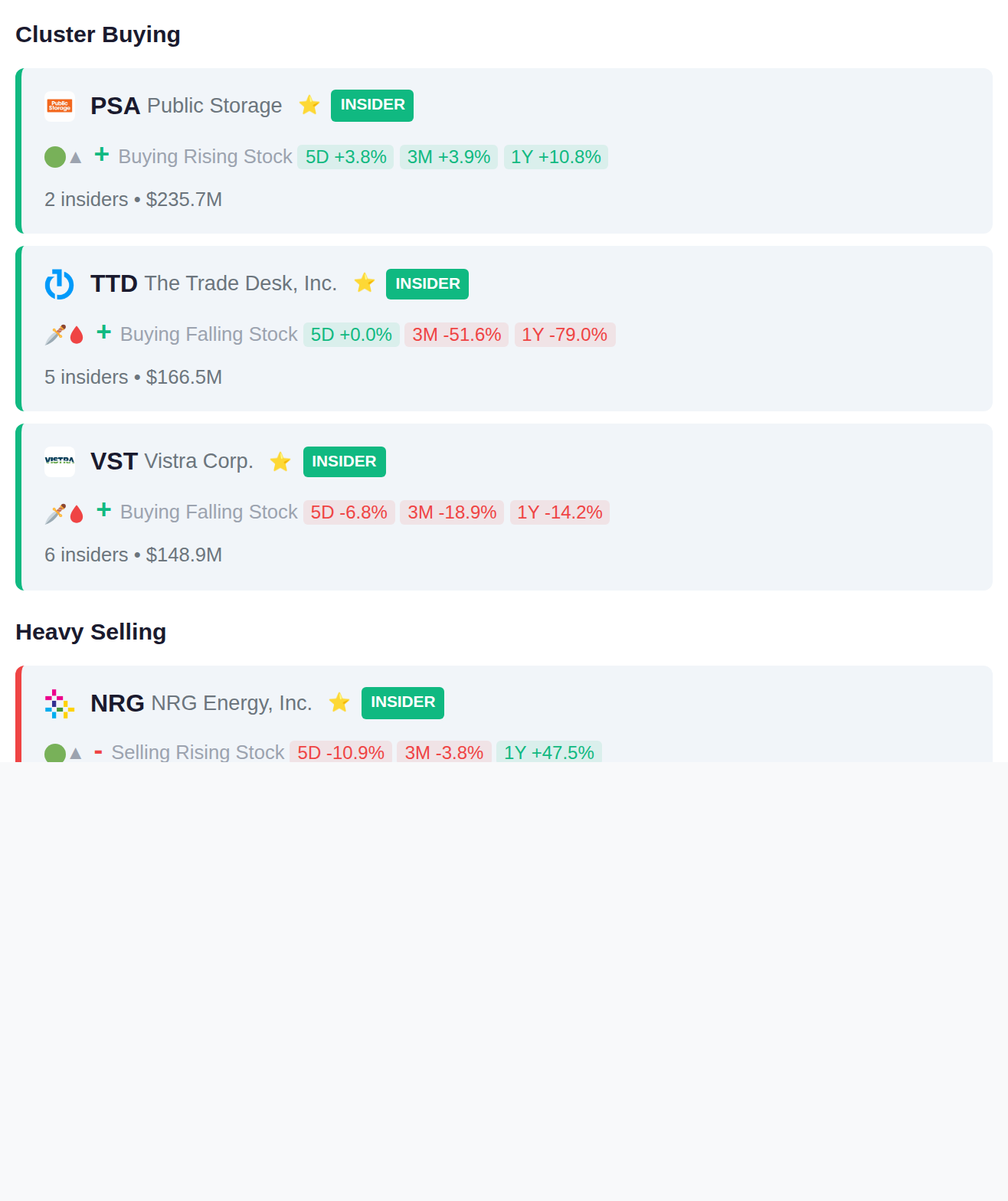
Public Storage, The Trade Desk, and Vistra Energy each saw multiple insiders adding to their positions this week, with Vistra recording the highest concentration at 6 insiders making purchases. On the selling side, NRG Energy saw 4 insiders distribute shares totaling $5.3 billion, followed by BrightSpring Health Services with 2 insiders selling $1.6 billion in stock.
Yesterday's session saw sharp moves with VTY.L dropping 34.2% and BVHMF falling 33.0%, while WIX surged 27.7%. Today's heavy slate of 511 earnings reports includes ADRO.JK and BFIN.JK showing recent accumulation patterns, while RAJA.JK and SIDO.JK have exhibited distribution signals ahead of their results. Tomorrow's calendar lightens considerably with just 47 companies scheduled to report.