
The Edge
Know What They Know
🐷 PIG ROAST
💬 Word on the Street
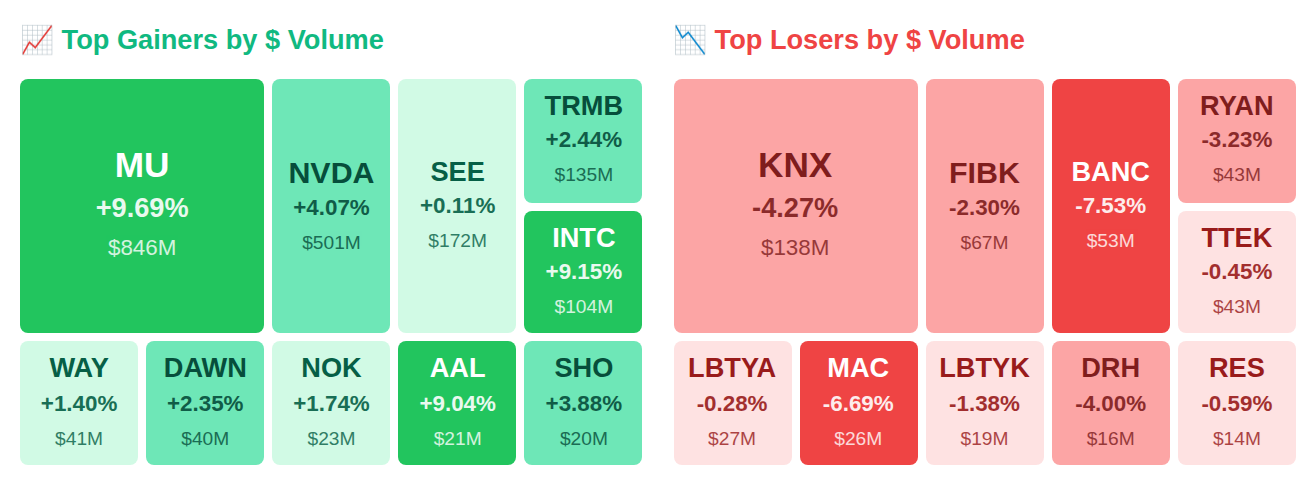
While Rep. David Taylor quietly scooped up shares of Installed Building Products (IBP) and insiders at Walmart (WMT) dumped $368.8 million in a single day, the real fireworks happened after hours—UnitedHealth Group (UNH) surged 9.4% on Medicare news despite bleeding 41.9% over the past year, and Avis Budget Group (CAR) rocketed another 20% in a violent short squeeze that's now delivered a jaw-dropping 99% gain year-to-date. With $9.7 billion flowing into stocks versus just $1.5 billion heading for the exits, the smart money is clearly making moves while retail investors are still nursing their wounds from the volatility storm. Here's what smart money is doing today.
 30
30 0
0📚 Jargon Buster
NAHB Index
Homebuilder mood ring. Over 50 = they’re popping champagne. Under 50 = they’re eating ramen in the dark.
Equity volatility declined sharply this week, with the VIX falling 22.2% to 24.17, though it remains in elevated territory above the 20 level that typically signals heightened investor concern about potential stock market swings. Bond market volatility told a different story, with the MOVE index dropping 21.9% to 12.13, indicating unusually calm conditions in fixed income markets. This divergence between elevated equity fear and subdued bond volatility suggests investors are pricing in different risk scenarios across asset classes, with stock market participants remaining more cautious despite the week-over-week improvement in sentiment measures.

|| Market Sutra ||
"Small cracks precede large collapses."
— Bear Stearns hedge funds imploded months before Lehman fell
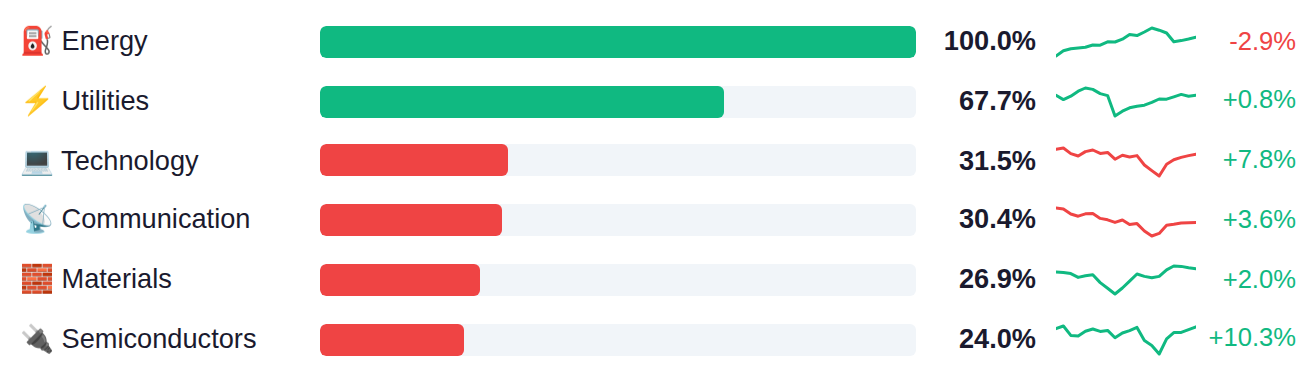
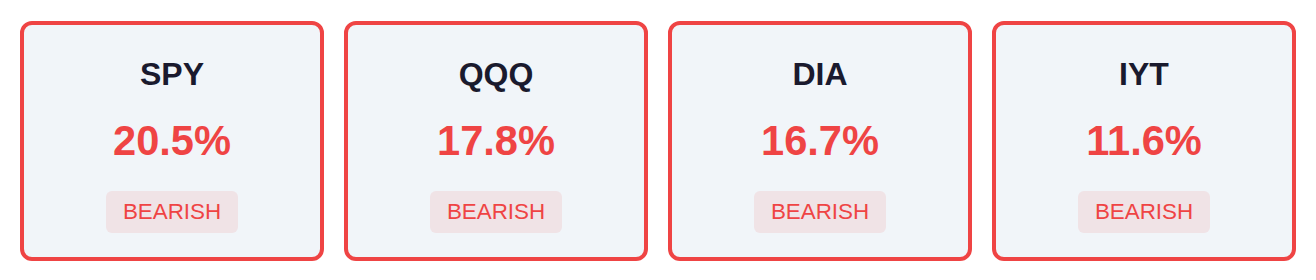
Market breadth remains narrow across major indices, with only 12-20% of constituents outperforming, suggesting a concentrated leadership environment. Energy and Utilities are dominating sector performance while traditional growth areas like Technology show modest participation at 32%, creating an unusual dynamic where defensive and commodity-linked sectors lead rather than economically-sensitive groups. The significant underperformance in Financials, Industrials, and Real Estate indicates limited conviction in economic acceleration, contrasting with the typical risk-on characteristics that would accompany broad market strength.
The Fed's net liquidity stood at $6.68 trillion as of April 1, up $18.2 billion from the prior week, indicating an expansion in available market liquidity that historically correlates with supportive conditions for risk assets. The next H.4.1 data release drops Thursday, April 9, which will show whether this liquidity expansion continued or reversed.
Yesterday's durable goods data painted a mixed picture as the core ex-transportation measure jumped 0.8% versus expectations of 0.5%, signaling underlying business investment strength, while headline orders fell 1.4% against estimates of a 0.5% decline—a miss driven largely by volatile aircraft orders. The Atlanta Fed's GDPNow tracker dropped from 1.6% to 1.3% for Q1, marking a notable deceleration from Q4's 4.4% pace and suggesting momentum is cooling as the Economic Surprise Index itself has eased from +4.0 to +2.9 over the past week. Markets today will focus on FOMC minutes for clues on rate path thinking and speeches from Fed officials Daly and Waller, while tomorrow's slate brings the critical Core PCE reading (expected to hold at 0.4% month-over-month and 3.0% year-over-year, down from 3.1%), alongside Q4 GDP's final revision and February personal spending data—all key inputs for assessing whether inflation's descent toward the Fed's 2% target has stalled.
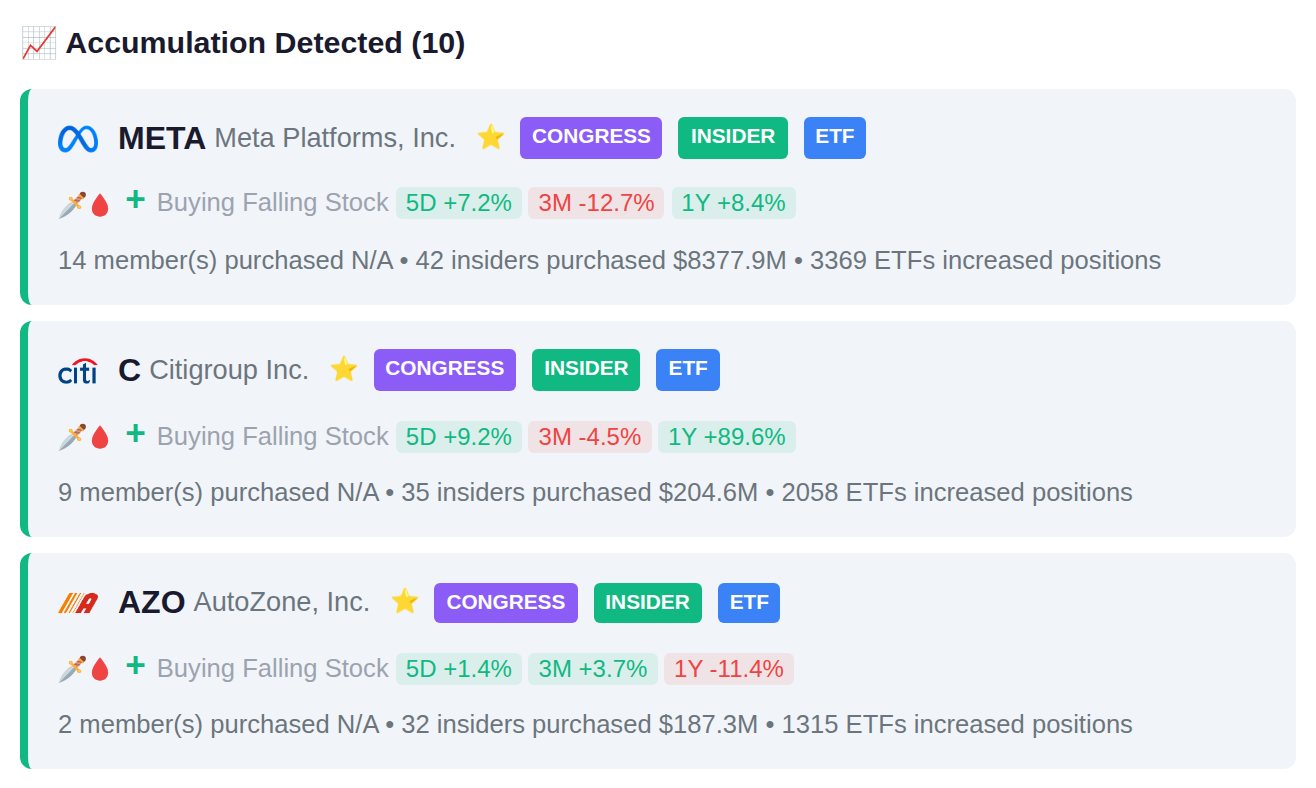
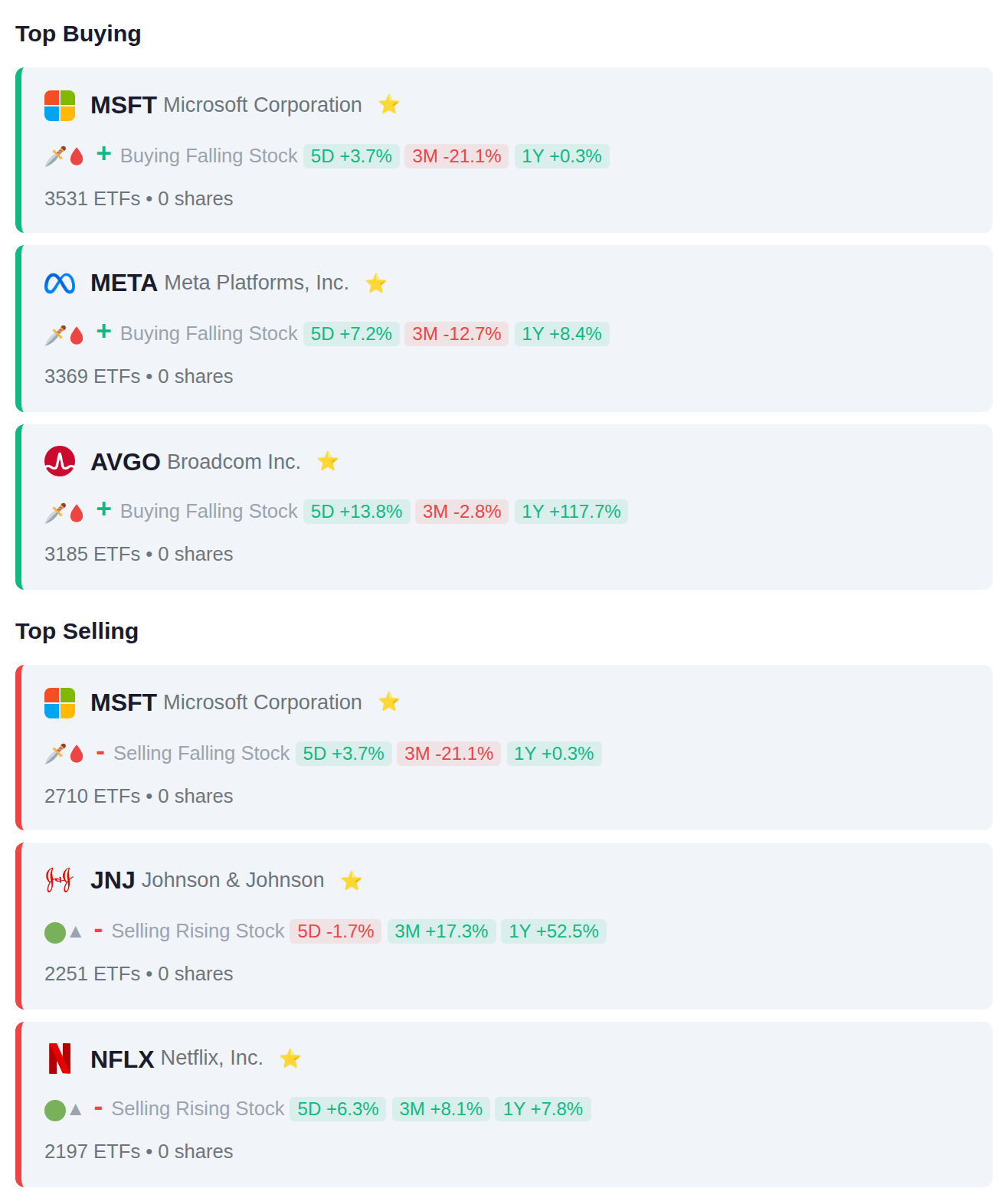
Institutional money managers demonstrated mixed conviction in mega-cap technology during the recent period, with MSFT seeing 3,531 ETFs add positions while simultaneously 2,710 ETFs reduced exposure, alongside heavy buying in META and AVGO indicating continued rotation within the technology sector itself. The selling pressure concentrated in healthcare (JNJ) and streaming (NFLX) suggests institutions rebalanced away from defensive plays and pandemic beneficiaries toward semiconductor and AI-infrastructure names.
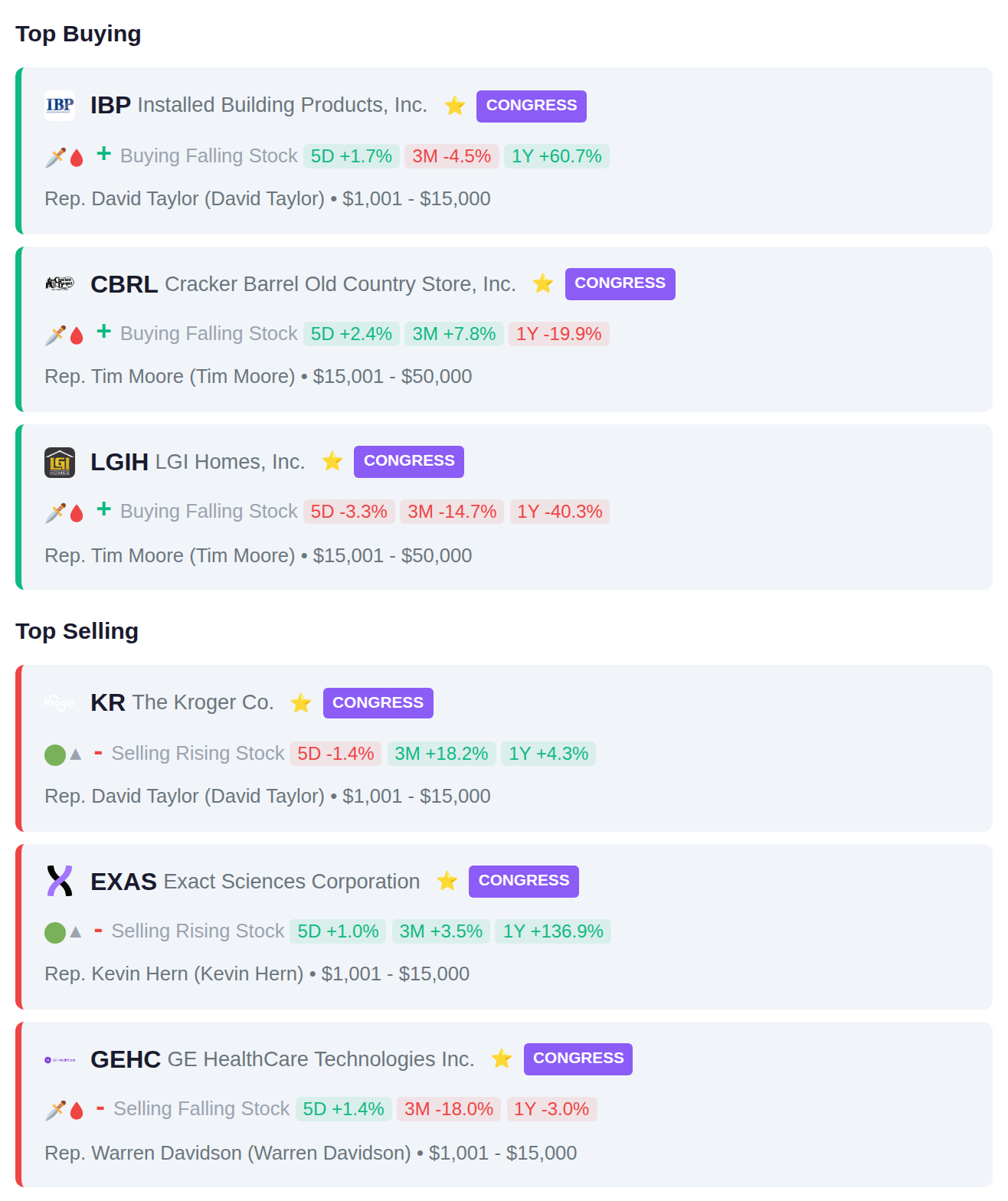
Congressional trading activity showed Rep. David Taylor rotating out of grocery retailer KR while purchasing IBP, and Rep. Tim Moore adding two positions in the consumer/housing sectors with CBRL and LGIH. On the selling side, Rep. Kevin Hern disposed of EXAS and Rep. Warren Davidson exited GEHC, indicating some members took profits or reduced exposure in healthcare-related holdings.
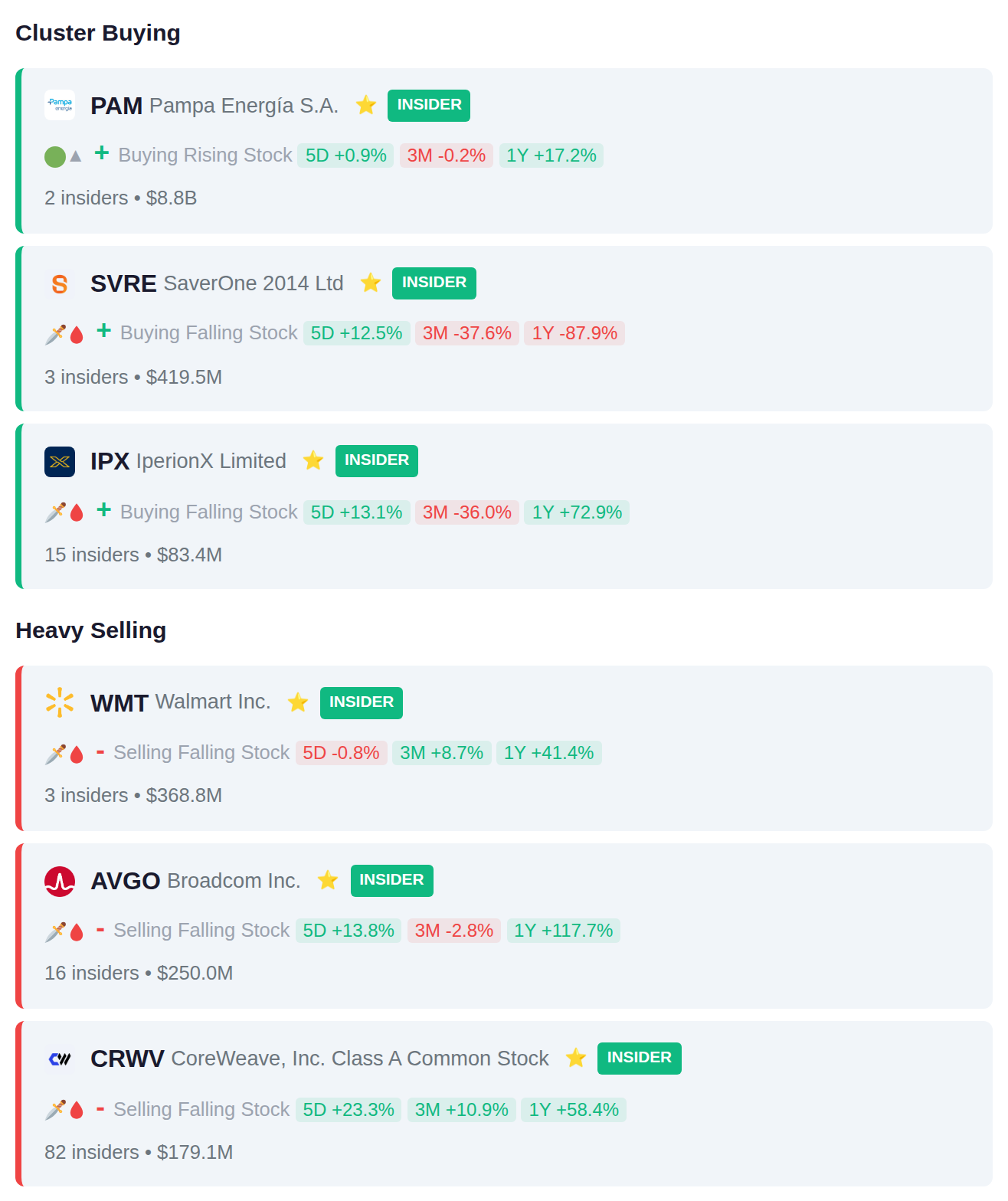
Notable cluster activity this week shows 15 insiders at IPX made coordinated purchases while 82 insiders at CRWV collectively sold $179.1M in shares. On the sales side, Walmart saw 3 insiders offload $368.8M and Broadcom recorded 16 insiders distributing $250M in positions.
Markets showed sharp divergence yesterday with AEHR surging 66.8% while GBX retreated 7.7% and LEVI gained 8.5%. Today 46 companies report earnings, with institutional accumulation patterns identified in 7581.T and 3543.T, while distribution activity has been observed in 2670.T and 8570.T ahead of their results. No companies are scheduled to report tomorrow.